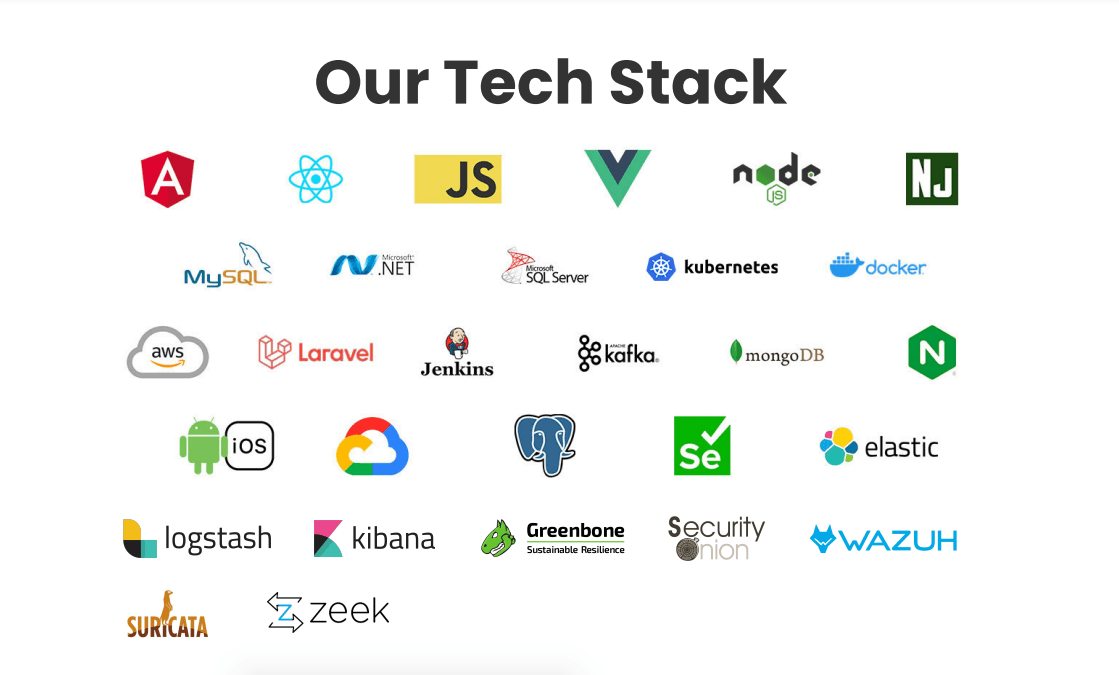
Choosing your tech stack is one of the most consequential startup decisions. This guide gives you a practical framework for 2026 — covering web, mobile, AI, and the common mistakes to avoid.
One of the most consequential early decisions a startup makes is the tech stack. Choose well, and you'll move fast, hire effectively, and scale without painful rewrites. Choose poorly, and you'll spend years fighting your own infrastructure. Yet most founders approach this decision without a clear framework — and many over-engineer it based on what's trending on Hacker News.
This guide gives you a practical framework for choosing the right stack in 2026, regardless of your product type.
Principle 1: Optimize for Speed of Iteration, Not Scale
Your first priority as a startup is learning. You need to ship features, get feedback, and pivot quickly. The best tech stack for a startup in 2026 is the one that lets your team move fastest — not the one that will handle a billion users (you'll solve that problem when you have it).
This means choosing boring, well-documented technologies over cutting-edge ones. Choose TypeScript over something exotic. Choose PostgreSQL over a custom distributed database. Choose managed services over self-hosted infrastructure.
Principle 2: Hire-ability Matters
Your stack defines your talent pool. Choosing an obscure framework or language might feel exciting but will make hiring your second and third engineer significantly harder. The most hire-able stacks in Canada and globally in 2026: TypeScript (React/Next.js + Node.js), Python (FastAPI or Django), and Go for high-performance services.
The 2026 Web Application Stack
Frontend / Full-stack
Next.js 15 (App Router) is the clear leader for web applications. It gives you server-side rendering, API routes, file-based routing, and excellent performance out of the box. The combination of React's ecosystem and Next.js's full-stack capabilities makes it the most productive choice for most web products.
Database
PostgreSQL remains the gold standard for relational data. Use it via Supabase (managed Postgres with auth, storage, and realtime built in), PlanetScale (MySQL-compatible with branching), or Neon (serverless Postgres). For document-heavy or flexible schema use cases, MongoDB or Firestore remain valid.
ORM / Query Layer
Prisma or Drizzle ORM are the dominant choices for TypeScript projects. Prisma is more mature with a larger ecosystem; Drizzle is lighter and faster. SQLAlchemy or Django ORM for Python projects.
Authentication
Don't build auth from scratch. In 2026, Clerk is the best developer experience for B2B SaaS (SSO, org management, user impersonation built in). Auth.js (NextAuth) is the right choice for simpler needs. Supabase Auth for Supabase-based projects.
Payments
Stripe. Full stop. It's the industry standard, has excellent documentation, webhooks that actually work, and the best fraud protection in the market. If you're in Canada, Stripe supports CAD and all major payment methods natively.
Hosting & Infrastructure
Vercel for Next.js applications (zero-config deploys, excellent CDN, preview environments per PR). Railway or Render for backend services and databases. AWS/GCP/Azure when you outgrow managed platforms — but not before.
Monitoring & Observability
Sentry for error tracking (essential). PostHog for product analytics. Datadog or Better Stack for infrastructure monitoring. Set all of these up before launch.
The 2026 Mobile Application Stack
React Native (with Expo) is the dominant choice for cross-platform mobile in 2026. A single TypeScript codebase for iOS and Android, with native performance for most use cases. Swift/SwiftUI + Kotlin/Compose for native apps that require deep platform integration or extreme performance optimization.
When to Use AI/ML in Your Stack
In 2026, most startups can integrate AI capabilities through APIs rather than building models. OpenAI, Anthropic, and Google Gemini APIs for language tasks. Replicate or HuggingFace for specialized models. Only build custom ML infrastructure when you have data and scale that justify it — which is usually much later than founders think.
Common Stack Mistakes to Avoid
Microservices too early
A monolith is almost always the right architecture for an early-stage startup. Microservices add coordination overhead and operational complexity that kills small teams. Start with a modular monolith and extract services only when you have a clear, painful reason to do so.
Over-engineering infrastructure
Kubernetes, service meshes, and multi-region deployments are for companies with 100k+ users and real SLAs. Building them early is CV-driven engineering — it looks impressive and slows you down.
Not using TypeScript
In 2026, there's no good reason to build a JavaScript project without TypeScript. The upfront investment in types saves exponentially more time in debugging and refactoring as the codebase grows.
A Template for Your Stack Decision
Before choosing your stack, answer these questions: What does my team already know well? (Start there.) What's the dominant stack in my hiring market? What are the 3 most critical technical requirements of my product (real-time, mobile, data-heavy, etc.)? What managed services can I use instead of building? What does my target scale look like in 18 months — and does my stack handle that without a rewrite?
The best stack is the one your team knows, that has excellent documentation, and that gets your product in front of users fastest. Everything else is secondary.
Conclusion
Tech stack decisions feel more permanent than they are. Most modern stacks can be migrated over time with discipline. The real risk isn't choosing the 'wrong' stack — it's spending so much time on the decision that you delay building and learning. Choose a reasonable, well-documented, hire-able stack, ship fast, and revisit as you grow.
At Novia-Lab, we help startups make these foundational decisions with confidence. If you're starting a new product or evaluating whether your current stack is holding you back, reach out.